Troubleshooting
Why Does My Golf Cart Go in Reverse but Not Forward?
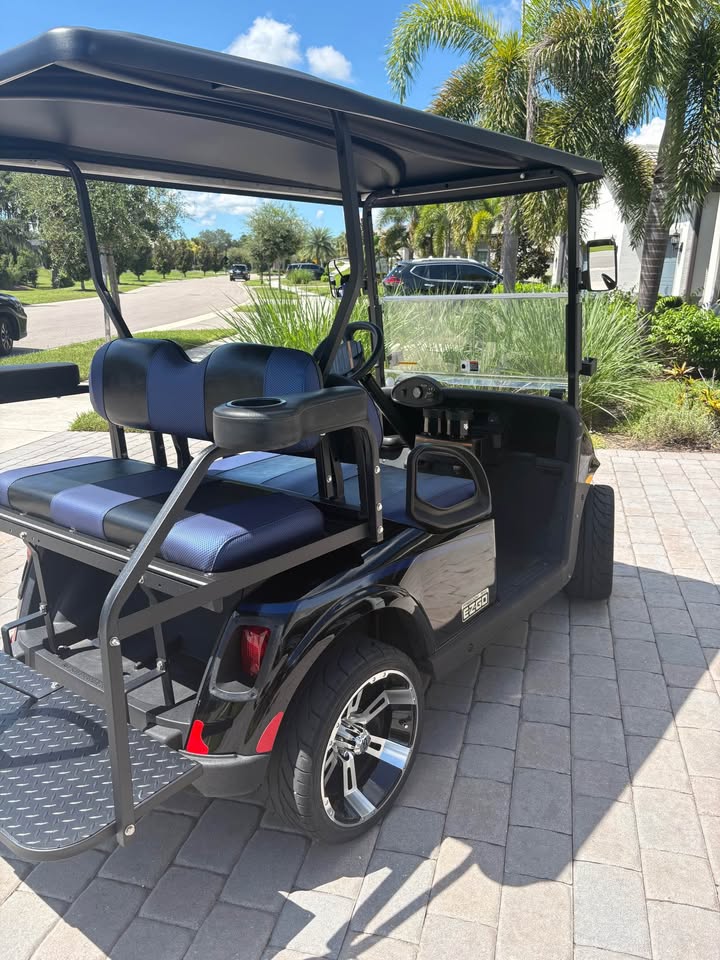
A golf cart that goes in reverse but not forward has proved that at least part of the power system can move the cart, but that does not identify the failed component. The cause may be the forward/reverse control, a switch input, wiring, a controller command, a safety circuit, a motor connection or a model-specific fault. The right first step is diagnosis, not replacing a solenoid, controller or motor based only on the direction symptom.
Park the cart safely and stop testing if it moves unexpectedly, jerks, smells hot or has damaged wiring. Record the make, model, year, display messages and exactly what happens when Forward is selected. For broad warning signs and safe next steps, see the guide to common golf cart problems.
What the one-direction symptom tells a technician
The fact that Reverse works is useful because it narrows the test sequence, but cart designs differ. Some models use a mechanical forward/reverse switch, while others send an electronic direction request to a controller. Modern ICON and other electronically controlled carts may use model-specific switches, sensors, harnesses and controller logic. A generic part-swap approach can miss the cause or introduce another problem.
A technician will usually confirm the battery supply and main connections first, then check whether the forward command reaches the appropriate control. The next checks depend on the wiring diagram and system design. A solenoid test may be relevant on some carts, but a working Reverse direction means the complete circuit must be evaluated rather than assuming one universal failure.
Components commonly included in the inspection
| Component or system | What the technician checks | Why it matters |
|---|---|---|
| Forward/reverse selector | Physical engagement, switch output and connector condition | The forward command may not be sent even though Reverse works |
| Wiring and connectors | Loose pins, corrosion, heat damage, continuity and previous modifications | One direction circuit may be open or intermittent |
| Controller inputs and output | Direction request, fault information and response under the correct test procedure | The controller may receive or process Forward differently from Reverse |
| Motor and direction circuit | Model-specific connections and behavior under controlled testing | Motor or circuit faults can affect only one commanded direction |
| Battery supply and cables | Voltage under load and high-current connection condition | Stable supply is required before control faults can be judged accurately |
| Safety switches and interlocks | Pedal, key, brake, seat or model-specific input operation | A missing input can prevent the expected drive command |
Checks an owner can make without guessing at the repair
Confirm the cart is fully in Run mode, the charger is disconnected and the direction selector is firmly in the correct position. Look for visible damage, a loose external connector or a display message. Do not open the controller, bypass an interlock, jumper a solenoid or force the selector. Those actions can create movement, electrical or component-damage risks.
When requesting service, explain whether the cart is completely silent in Forward, clicks without moving, moves briefly, or jerks. State whether the problem began after rain, storage, a battery change, controller programming, motor work or accessory installation. That timeline often matters more than a guess about the failed part.
Is the golf cart worth repairing?
Repair value depends on the diagnosis, the cart's overall condition and the written quote. Consider battery age, charger condition, brakes, steering, tires, corrosion, previous modifications and how the cart is used. A limited switch or wiring repair is a different decision from a controller, motor and battery system that all need work.
SureCart's Signature Service starts with shop diagnosis and a 12-point safety check. The current starting price is $95 when the cart is brought to the shop, or $195 total with pickup and return delivery. Parts and repair labor are quoted separately, so the owner can compare the proposed work with the cart's condition before approving it. See the Signature Service details for the current process.
Frequently Asked Questions
Is the forward/reverse switch always the problem?
No. It is one possible cause, but wiring, controller inputs, safety circuits, connections and model-specific motor controls can create the same symptom.
Can a bad solenoid let the cart reverse but not go forward?
That depends on the cart's design. A solenoid is part of the test path on some models, but the direction symptom alone does not prove it is defective.
Should I keep trying Reverse and Forward?
No. Repeated testing can worsen a loose or overheated connection and can make an unpredictable cart unsafe. Record the symptom, park it securely and arrange diagnosis.
What information helps with an ICON cart?
Provide the exact ICON model and year, battery type, display message or code, recent work and whether the cart is stock or modified. Model-specific information is important because control systems vary.