Repairs & Performance
How to Make a Golf Cart Faster
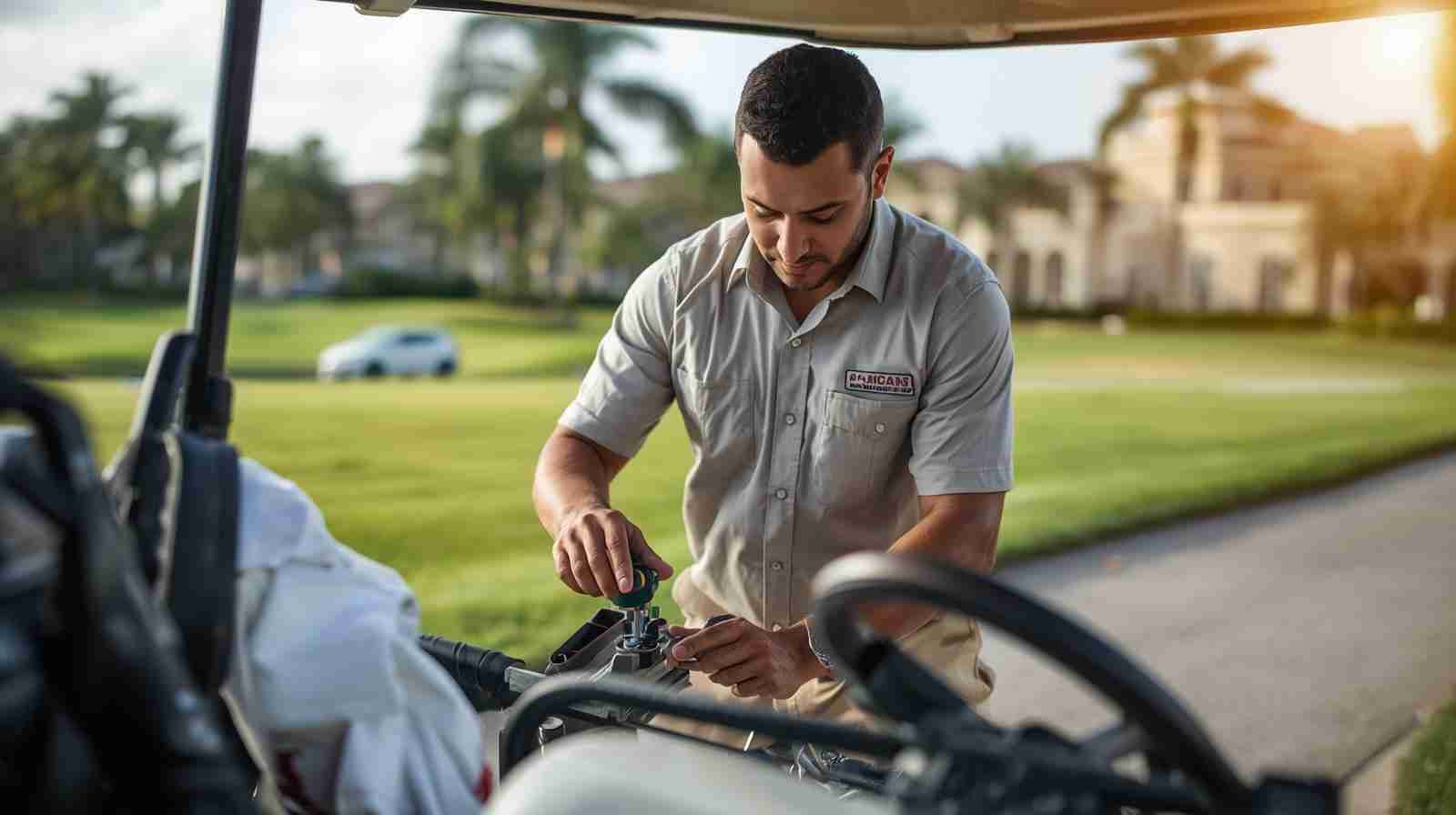
If you are wondering how to make a golf cart faster, the safest answer is to start with the cart’s exact make, model, and power system, then verify the manufacturer’s approved speed settings, controller limits, and service guidance before changing anything. In Florida, modifying a cart so it can exceed the state’s golf cart speed threshold may change how it is classified, so every speed change should be checked for safety, legality, braking performance, and road use before it is driven anywhere outside private property.
Speed upgrades are not one size fits all. What works on one electric cart may not apply to another, and gas-powered carts have different adjustment points than electric carts. Before you spend money on parts or programming, confirm the cart’s battery voltage, controller type, motor condition, tire size, and whether the cart is intended for off-road, neighborhood, or golf-course use. If you are considering professional help, a local technician can inspect the cart and the related systems through golf cart repair englewood fl.
What Actually Makes a Golf Cart Faster
Most speed gains come from one or more of three areas: electronics, power delivery, and drivetrain restrictions. The right path depends on the cart’s design and current condition. Sometimes a cart feels slow because of maintenance issues rather than a lack of power. Low battery health, underinflated tires, dragging brakes, worn bushings, or a misadjusted throttle can all reduce speed and acceleration.
Common categories of speed changes
- Controller programming: Some electric carts allow speed settings, throttle maps, or governor limits to be adjusted through approved software or service tools.
- Battery or power changes: Certain carts can benefit from better battery health, correct charging, or approved voltage and component upgrades, but these changes must match the motor and controller.
- Mechanical restriction changes: Gas carts may have governor settings or drivetrain restrictions that limit top speed, while electric carts may have electronic limits instead.
None of these should be treated as a shortcut. Increasing speed can also increase heat, wear, stopping distance, and steering sensitivity. That is why every change should be paired with a full inspection, especially if the cart is used near pedestrians or on public streets.
Start with maintenance before modifications
Before making a cart faster, make sure it is already operating at its best. A cart that is out of tune or underpowered will not respond well to upgrades and may become less reliable afterward.
- Check battery condition, terminal cleanliness, and charger operation.
- Verify tire pressure and tire condition.
- Inspect brakes for wear, dragging, or uneven engagement.
- Look for loose wiring, damaged connectors, or corrosion.
- Test throttle response and acceleration under normal load.
- Confirm the cart is using the correct battery type and voltage for its system.
If any of those items are out of spec, fix them first. In many cases, that restores lost speed without needing a performance upgrade. For a related overview of common issues that can affect performance, see common golf cart problems.
Controller and programming options
On many electric carts, the controller is the main limit on speed. Some controllers have manufacturer-approved settings that can be changed through authorized software or a technician menu. Others are locked down and should not be altered outside the service manual. If your cart supports a faster setting, it should be matched with the rest of the drivetrain and the cart’s intended use.
Important safety note: controller changes can affect acceleration, regenerative braking, motor temperature, and battery draw. A cart that accelerates faster may also drain batteries more quickly and place more stress on the motor and wiring. Any programming change should follow the manufacturer’s instructions and be tested cautiously in a controlled area.
Battery and power considerations
Battery condition strongly affects how a cart performs. Weak, aging, or mismatched batteries can reduce current delivery and make the cart feel sluggish. In some cases, improved battery maintenance or a properly matched battery replacement can restore performance. Voltage changes or pack redesigns, however, should be treated as technical upgrades that must be evaluated against the controller, motor, charger, and wiring.
Do not assume that a higher voltage setup is automatically better. A cart that is not designed for the change can overheat, lose reliability, or create a safety issue. Because battery and drivetrain changes can have ripple effects, any upgrade should be reviewed by a qualified technician and installed according to the cart’s service documentation.
Gas cart governor and drivetrain limits
Gas-powered carts may use a governor or similar restriction to control top speed. Adjustments in this area can change how the engine behaves and how the cart responds under load. Mechanical changes should never be made by guesswork, because even small adjustments can affect belt wear, clutch behavior, and braking needs.
Comparison: The safest speed increase is usually the one that restores lost performance first. Controller tuning and maintenance may provide modest gains on electric carts, while gas carts may respond to governor and drivetrain checks, but both types can become unsafe if speed is increased without braking and steering inspection.
Table: common approaches and what to check
| Approach | Best for | What to verify first | Key caution |
|---|---|---|---|
| Battery and charging service | Electric carts with weak acceleration | Battery age, charger output, cable condition | Worn batteries can make the cart seem slow |
| Controller settings review | Electric carts with approved software options | Model compatibility and service manual limits | Programming changes can affect heat and braking |
| Governor and drivetrain inspection | Gas carts with limited top speed | Factory specifications and linkage condition | Do not override safety limits without expert review |
| Tire and brake maintenance | Any cart that feels underpowered | Tire pressure, brake drag, alignment | Bad maintenance can hide the real problem |
Safety, Florida Law, and Practical Upgrade Planning
In Florida, a golf cart is generally defined as a motor vehicle designed for golf-course use and not capable of exceeding 20 mph. If a modification allows it to exceed that threshold, it may no longer be treated as a golf cart under state law. That matters because local road rules, equipment requirements, and where the cart can be operated may change. If the cart will be driven on public roads in communities such as Sarasota, Bradenton, Lakewood Ranch, Venice, Englewood, North Port, or Port Charlotte, local ordinances can be more restrictive than state law, so check the applicable city or county rules before using the cart on streets.
Because of those legal and safety issues, the smartest upgrade plan is to work from the cart’s current condition outward. First restore performance, then evaluate approved speed options, then confirm the cart still stops, steers, and charges properly. That sequence helps you avoid spending money on a modification that creates a bigger problem later.
What to inspect before any speed increase
- Brakes: Verify stopping power and pedal feel, especially if the cart will go faster than it did before.
- Tires: Check pressure, wear, and load rating.
- Steering and suspension: Look for play, loose parts, or worn components.
- Battery and charging system: Confirm the system can support the added demand.
- Motor and controller temperature: Watch for overheating after test runs.
- Lighting and visibility equipment: If the cart is used near traffic, make sure required equipment is present and working.
Speed should never be increased by bypassing protective devices, disabling safety systems, or ignoring manufacturer limits. Those shortcuts can create a cart that is harder to control, harder to stop, and more likely to fail under load. A professional inspection is especially important if the cart is used by multiple drivers or in mixed traffic areas.
How to choose the right upgrade path
Not every cart needs a performance modification. Sometimes the better choice is to keep the cart in its original speed range and improve reliability, braking, and battery life. If you do decide to move forward, focus on changes that are approved for the specific cart and that preserve safe operation.
- Use the manufacturer’s service manual as the first reference.
- Match any parts or programming to the cart’s exact model and voltage.
- Avoid universal assumptions about speed kits or controller settings.
- Test the cart in a safe, low-traffic area after any change.
- Reinspect brakes, steering, and tires after the first drive.
For many owners, a careful inspection reveals that the cart does not need a major modification at all. It may only need a battery replacement, cable repair, or proper controller setup to feel noticeably better. That approach is often safer, more predictable, and more cost-conscious than chasing the highest possible top speed.
Frequently Asked Questions
What is the safest first step if I want more speed?
Identify the exact cart brand, model, battery voltage, and controller type, then check the manufacturer’s approved service information. That tells you whether any speed adjustment is allowed and what systems must be checked first.
Can I make an electric golf cart faster just by changing the batteries?
Not necessarily. Battery condition matters a lot, but a battery change alone does not guarantee more speed. The controller, motor, wiring, charger, and overall system must all be compatible.
Will making my golf cart faster affect braking?
Yes. Higher speed increases stopping distance and can expose worn brakes or weak tires. Any speed change should be followed by a full brake, steering, and tire inspection.
Is it legal to make a golf cart faster in Florida?
It depends on the final speed and how the cart is used. Florida’s golf cart definition is tied to a 20 mph limit, so a faster modified cart may be reclassified and may face different rules on public roads.
Should I hire a technician for speed modifications?
Yes, that is the safest option. A qualified technician can verify whether the upgrade is appropriate, then inspect the cart’s braking, steering, electrical, and charging systems before and after the change.